

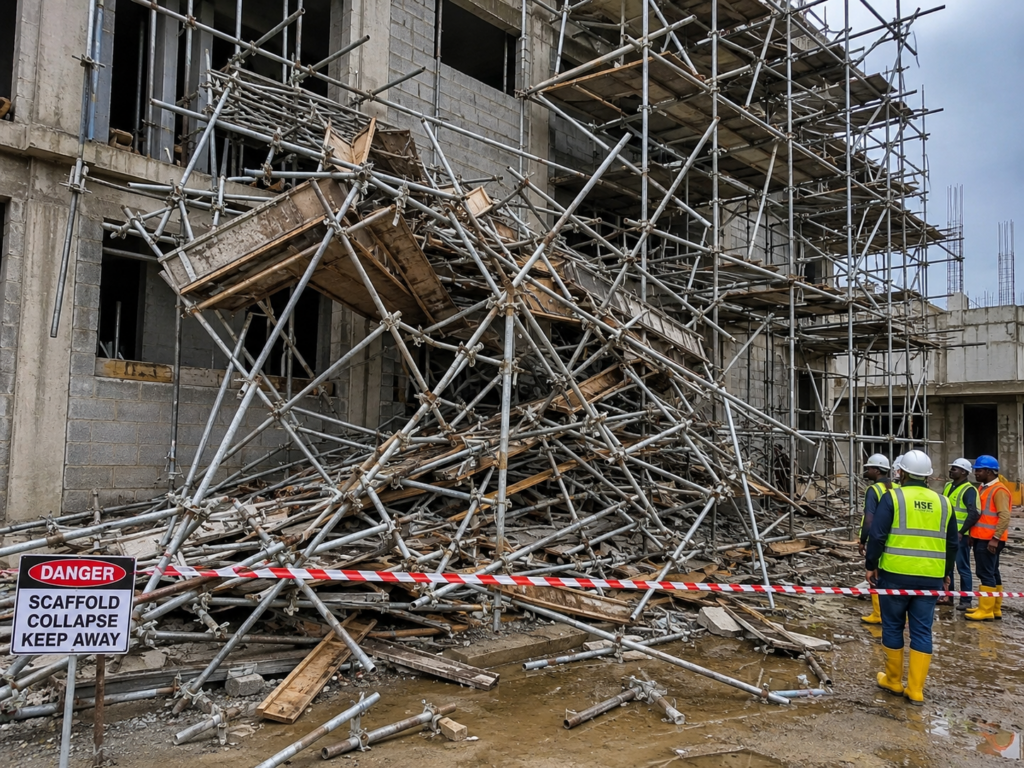
Scaffold collapse is one of the most serious hazards on construction sites, industrial facilities, maintenance projects, and other workplaces where temporary access structures are used. A scaffold collapse can result in falls from height, falling materials, equipment damage, serious injuries, fatalities, project delays, and significant financial losses. Preventing scaffold collapse requires proper planning, competent personnel, suitable components, adequate foundations, correct erection procedures, regular inspections, and strict adherence to applicable safety requirements.
This blog highlights 15 practical tips for preventing scaffold collapse and maintaining a safe and stable scaffold throughout its period of use.
1. Ensure the Scaffold Is Designed for Its Intended Use
Before scaffold is erected, the scaffold system should be properly designed or configured for the intended work, height, loading conditions, and site environment. The design should consider the expected number of workers, tools, equipment, stored materials, platform dimensions, wind exposure, and any additional loads that may affect scaffold stability. A scaffold should never be overloaded beyond its rated capacity.
2. Use Competent and Trained Scaffolders
Scaffold should be erected, altered, dismantled, and supervised by people who have the appropriate training, knowledge, skills, and experience for the type of scaffold being used. Competent scaffolders are better equipped to identify defective components, understand scaffold configurations, install bracing correctly, and recognize conditions that could cause instability. Employers should ensure that workers involved in scaffolding activities receive appropriate scaffold erection and safety training.
3. Inspect All Scaffold Components Before Use
Every scaffold component should be inspected before erection to ensure that it is suitable for use. Standards, tubes, couplers, boards, base plates, frames, braces, guardrails, access components, and other parts should be checked for cracks, excessive corrosion, bending, deformation, damaged threads, excessive wear, or other defects. Damaged or defective components should be removed from service and should not be incorporated into the scaffold.
4. Provide a Strong and Stable Foundation
One of the most important ways to prevent scaffolding collapse is to establish a stable foundation. The scaffold should be erected on ground or a supporting surface that can safely carry the imposed loads. Base plates and sole boards should be used where required to distribute loads and prevent settlement. Scaffolding should not be supported on unstable materials such as loose bricks, blocks, drums, pallets, or other makeshift supports.
5. Install Base Plates and Sole Boards Correctly
Base plates help distribute the scaffold load into the supporting surface, while sole boards can provide additional load distribution where ground conditions require it. These components must be correctly positioned and adequately supported. Uneven settlement beneath scaffold standards can cause the structure to become unstable and can increase the risk of collapse.
6. Install Bracing Correctly
Adequate bracing is essential for maintaining scaffold stability. Longitudinal, transverse, and other required bracing should be installed according to the scaffold design or manufacturer’s instructions. Bracing prevents excessive movement and helps the scaffold resist lateral forces such as wind and operational loads. Missing, incorrectly positioned, or removed braces can significantly reduce the stability of a scaffold.
7. Provide Adequate Ties and Anchorage
Where required by the scaffold design, the scaffold should be securely tied or otherwise anchored to a suitable supporting structure. Ties help prevent the scaffold from moving away from the building or overturning. They should be installed at the required locations and should not be removed without an appropriate assessment and control measure. Any temporary removal of ties should be properly managed and restored as soon as possible.
8. Do Not Overload Scaffold Platforms
Scaffold platforms should never be used as uncontrolled storage areas. Excessive quantities of bricks, blocks, pipes, tools, equipment, or other materials can exceed the scaffold’s intended load capacity and create instability. Workers should know the scaffold’s safe working load and ensure that materials are distributed appropriately across the platform rather than concentrated in one location.
9. Maintain Proper Platform Construction
Scaffold platforms should be properly constructed using suitable scaffold boards, decking, or platform components designed for the system. Boards should be adequately supported, correctly positioned, and secured against movement where necessary. Gaps, damaged boards, excessive overhangs, and improperly supported platforms can create additional hazards and may contribute to unsafe loading conditions.
10. Install Guardrails, Toeboards, and Edge Protection
Although guardrails and toeboards are primarily fall-prevention measures, they also form an important part of a properly configured scaffold. The scaffold should have suitable edge protection wherever workers could fall from an open edge. Components should be correctly installed and should not be removed without authorization and appropriate controls.
11. Control Wind and Severe Weather Conditions
Strong winds can exert significant lateral forces on scaffolding, particularly when the structure is covered with sheeting, netting, banners, or other materials that increase wind loading. Site management should consider weather conditions when planning scaffold use. Following severe weather, the scaffold should be inspected for movement, damage, settlement, displaced components, or compromised ties before workers are allowed to use it.
12. Never Make Unauthorized Modifications
Scaffold components should never be removed, repositioned, cut, substituted, or modified without authorization from a competent person. Removing a brace, tie, standard, guardrail, or other structural component can compromise the integrity of the entire scaffold. If access requirements change, the scaffold should be formally assessed and altered by competent personnel.
13. Conduct Regular Scaffold Inspections
Scaffold should be inspected at appropriate intervals and following events that could affect its structural integrity, such as severe weather, impact, alteration, prolonged non-use, or suspected damage. Inspections should identify issues such as missing components, loose couplers, damaged boards, settlement, inadequate ties, defective braces, and unauthorized modifications. Inspection findings should be documented and corrective actions completed before the scaffold is returned to service.
14. Control Scaffold Access and Housekeeping
Good housekeeping helps maintain scaffold stability and safe working conditions. Unnecessary materials should not be allowed to accumulate on platforms, and access routes should remain clear. Workers should also be prevented from climbing braces or using unsuitable objects to gain additional height. Scaffold access should be provided through suitable ladders, stair towers, or other approved access systems.
15. Use a Scaffold Handover and Inspection System
Before a scaffold is released for use, it should be checked by a competent person and formally handed over where the applicable site procedure requires it. A scaffold tag or inspection system can help communicate its status to workers. The inspection process should confirm that the scaffold has been erected according to the approved configuration, is adequately supported and braced, has appropriate access and edge protection, and is suitable for the intended load.
Conclusion
Scaffold collapse can be prevented when employers, scaffold contractors, supervisors, and workers take a proactive approach to scaffold safety. The 15 tips for preventing scaffolding collapse outlined above provide practical measures for improving scaffold stability and reducing the risk of structural failure.
For organizations involved in construction, oil and gas, industrial maintenance, and other work-at-height activities, investing in scaffolding safety training, scaffold inspector training, scaffold erection training, and competent supervision can significantly strengthen workplace safety and reduce the likelihood of scaffold-related incidents.
Primelift Safety Resources Limited offers scaffold training courses which are conducted in accordance with standards and regulations.
Contact us on +234 9115687051 or email us at training@primeliftsafetyng.com.
Visit our website at www.primeliftsafetyng.com