

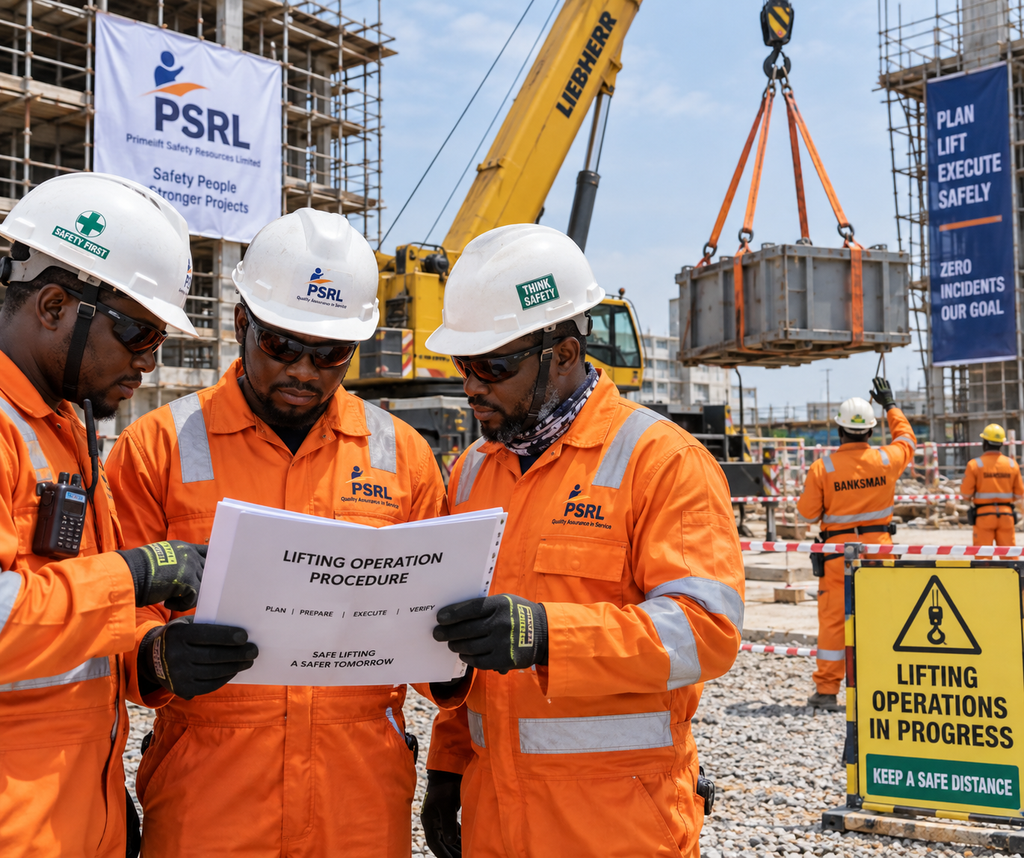
Lifting operations are among the high-risk activities in industries such as oil and gas, construction, manufacturing, marine operations and logistics. Cranes, hoists, forklifts, lifting accessories, and other lifting equipment can cause serious injuries, fatalities, equipment damage, and significant financial losses when they are poorly selected, inadequately maintained, or operated by unqualified personnel. Ensuring compliance with lifting regulations is therefore essential for protecting workers, maintaining operational efficiency, and meeting legal and industry requirements.
How to Comply with Lifting Regulations
- Understand the Applicable Lifting Regulations
The first step in ensuring compliance with lifting regulations is to identify and understand the legal requirements and recognized standards that apply to lifting operations.
For organizations working with lifting equipment, regulations and standards such as the Lifting Operations and Lifting Equipment Regulations 1998 (LOLER), Provision and Use of Work Equipment Regulations 1998 (PUWER), BS 7121, relevant ISO standards, manufacturer requirements, and applicable industry guidance can provide useful frameworks for safe lifting operations.
2. Conduct a Comprehensive Risk Assessment
A comprehensive risk assessment is fundamental to lifting compliance. Before any lifting operation begins, employers should identify potential hazards associated with the load, lifting equipment, lifting accessories, work environment, personnel, and surrounding activities.
The assessment should consider factors such as load weight, load dimensions, center of gravity, lifting points, equipment capacity, ground conditions, weather conditions, overhead obstructions, underground services, proximity to people, power lines, restricted areas, and the possibility of dropped loads. The assessment should also identify appropriate control measures that will reduce risks to an acceptable level.
3. Ensure Lifting Operations Are Properly Planned
Proper planning is one of the most important requirements for safe and compliant lifting operations. Regulation 8 of LOLER 1998 requires every lifting operation should be planned by a competent person who understands the equipment, load characteristics, environmental conditions, and hazards associated with the operation.
A lifting plan should establish how the lift will be performed, what equipment will be used, the required lifting capacity, the configuration of the crane or lifting machine, the position of the equipment, the lifting accessories required, communication arrangements, exclusion zones, and emergency arrangements.
4. Use Competent and Trained Lifting Personnel
Regulation 9 of PUWER 1998 requires organizations to ensure that people involved in lifting operations are competent for the tasks they perform. Competence should include appropriate knowledge, practical skills, experience, training, and understanding of the hazards associated with the work.
Crane operators, forklift operators, riggers, banksmen, slingers, lifting supervisors, appointed persons, and other personnel involved in lifting operations should receive appropriate training and assessment relevant to their responsibilities.
5. Select the Correct Lifting Equipment
Using equipment with insufficient capacity or unsuitable characteristics is a major cause of lifting incidents. Organizations must ensure that lifting equipment is appropriate for the intended operation and capable of safely handling the load.
Before selecting equipment, the lifting team should establish the weight and characteristics of the load, the required lifting height, lifting radius, working environment, access limitations, ground conditions, and other operational requirements. The rated capacity of the equipment must be suitable for the actual lifting configuration.
6. Inspect Lifting Equipment Before Use
Pre-use inspection is an essential component of lifting equipment compliance. Regulation 9 of LOLER 1998 requires the inspection and examination of lifting equipment before use. Operators and other competent personnel should inspect lifting equipment to identify defects or conditions that could compromise safe use of the lifting equipment.
Cranes, hoists, forklifts, slings, shackles, hooks, lifting beams, spreader beams, chains, wire ropes, and other lifting accessories should be inspected and certified according to appropriate procedures and manufacturer recommendations.
Any equipment suspected of being defective should be removed from service until it has been properly assessed and, where necessary, repaired or replaced by an appropriately qualified person.
7. Maintain Thorough Examination and Inspection Records
Organizations should maintain accurate records demonstrating that lifting equipment has received the required inspections, maintenance, testing, and thorough examinations. Regulation 11 of LOLER 1998 specifies the legal duties of employers and duty holders regarding the keeping and retention of information and records related to thorough examinations and tests
Documentation provides evidence that the organization has implemented its lifting equipment management system and can help demonstrate compliance during audits or
8. Follow Safe Working Load and Load Chart Requirements
One of the most important principles of lifting compliance is never exceed the rated capacity of lifting equipment. The safe working load or working load limit must be understood and respected throughout the lifting operation.
Regulation 4 of LOLER 1998 requires that every employer ensures lifting equipment is of adequate strength and stability for each load.
Where uncertainty exists regarding the weight of a load or the capacity of the lifting equipment, the operation should be stopped until the information has been verified.
9. Maintain Lifting Equipment Properly
Preventive maintenance is essential for keeping lifting equipment safe and compliant throughout its operational life. Regulation 5 of PUWER 1998 requires employer to ensure that work equipment is maintained in an efficient state, in efficient working order and in good repair.
Repairs should be carried out by competent personnel, and defective equipment should remain out of service until it has been confirmed safe for operation.
10. Carry Out Regular Lifting Compliance Audits
Regular audits help organizations identify weaknesses in their lifting management systems before they result in incidents. Audits should examine equipment condition, inspection records, lifting plans, risk assessments, training records, operator competence, maintenance activities, lifting accessories, storage arrangements, and compliance with established procedures.
The results of audits should be documented, communicated to responsible personnel, and followed by corrective actions. Management should monitor whether identified deficiencies have been effectively closed rather than simply recording them as completed.
Conclusion
Ensuring compliance with lifting regulations requires much more than maintaining certificates for cranes and lifting accessories. It requires a comprehensive system that combines competent personnel, suitable equipment, effective inspection and maintenance, detailed risk assessment, proper lifting planning, appropriate supervision, effective communication, and continuous monitoring.
Organizations that take a proactive approach to lifting compliance can significantly reduce the likelihood of dropped loads, equipment failures, struck-by incidents, overturning accidents, and other serious lifting-related events. Effective compliance also supports operational efficiency, protects employees and assets, and demonstrates a strong commitment to occupational health and safety.
To learn more about how to comply with various lifting regulations, contact us for our various lifting operation trainings.
Call/WhatsApp us on +234 9115687051. Email us on training@primeliftsafetyng.com.
www.primeliftsafetyng.com.