

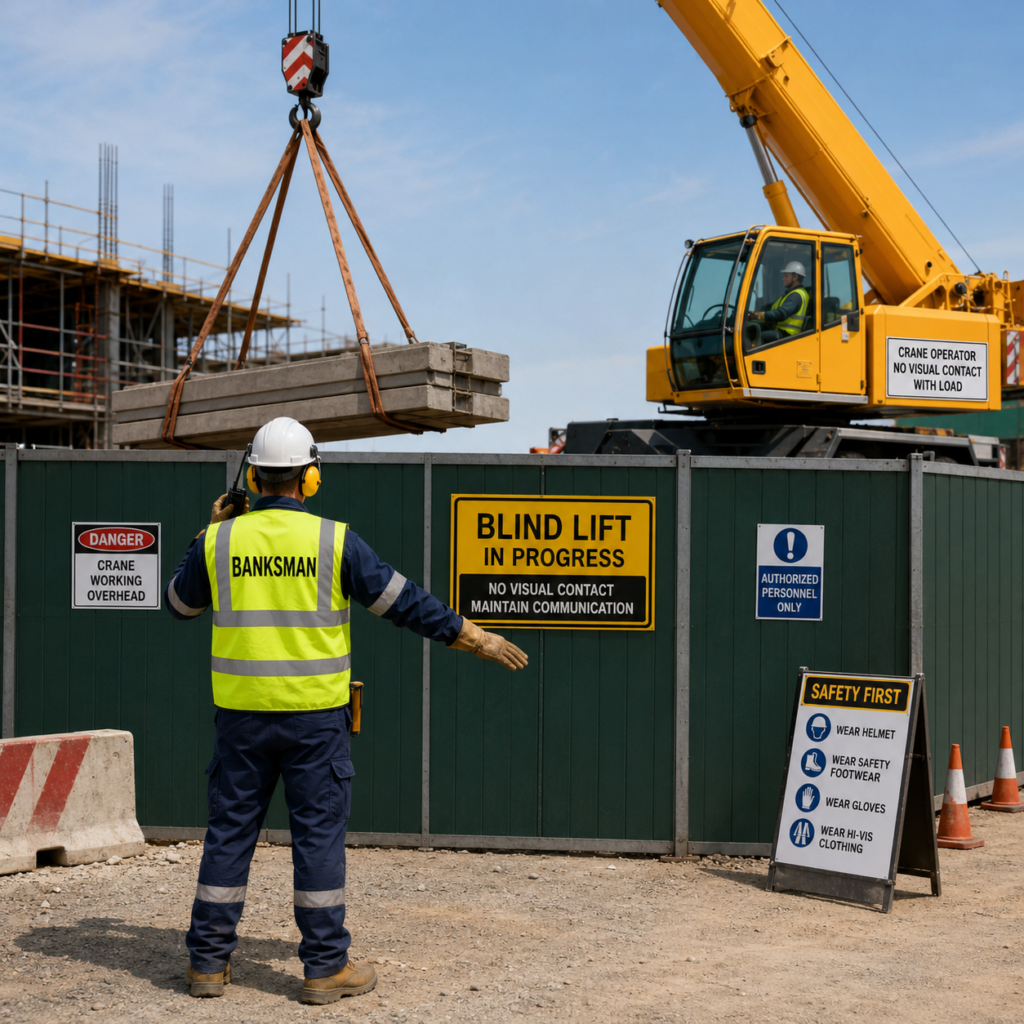
Blind lifts are among the most challenging and hazardous activities in the lifting and material handling industry. Whether on a construction site, offshore installation, manufacturing facility, warehouse, or marine terminal, a blind lift introduces additional risks because the crane operator cannot maintain continuous visual contact with the load, its travel path, or its landing position. This loss of visibility significantly increases the likelihood of communication errors, collisions, dropped loads, and serious injuries if the operation is not carefully planned and supervised.
This blog explains the essential steps involved in managing blind lifts safely and highlights the best practices that should be incorporated into every lifting operation.
What Is a Blind Lift?
A blind lift is a lifting operation in which the crane operator loses direct sight of the load, hook, landing area, or part of the lifting path during the movement of the load. A blind lift requires the operator to depend almost entirely on information provided by a designated banksman or signaller.
Why Blind Lifts Are High-Risk Operations
- Blind lifts present unique hazards because one of the crane operator’s primary safety controls—visual observation—is unavailable. Without direct visibility, the operator cannot immediately detect hazards such as personnel entering the lifting zone, unexpected obstacles, swinging loads, or unsafe load positioning.
- Communication errors become a major concern during blind lifts. If instructions from the banksman are misunderstood, delayed, or interrupted, the crane may continue moving the load into an unsafe position which can result in serious accidents.
- Environmental conditions such as strong winds, poor lighting, rain, further increase the complexity of blind lifting operations by affecting visibility and communication.
Proper Lift Planning During Blind Lifts
The foundation of every safe blind lift is a comprehensive lifting plan. Proper planning allows the lifting team to identify hazards, determine appropriate control measures, and establish clear responsibilities before work begins.
A detailed lifting plan should identify the load weight, dimensions, centre of gravity, lifting points, crane configuration, lifting accessories, travel path, landing area, communication methods, environmental conditions, and emergency procedures. The plan should also define exclusion zones, identify potential obstructions, and establish contingency measures should communication fail or unforeseen circumstances arise during the lift.
Selecting Competent Personnel for Blind Lifts
Personnel play the most important role in the success of a blind lifting operation. Even the most advanced crane cannot compensate for poor communication or inadequate competence among the lifting team.
The crane operator must be properly trained, certified, and experienced in blind lifting operations. Equally important is the designated banksman or signaller, who effectively becomes the operator’s eyes throughout the lift. The banksman must maintain continuous visual contact with the load while providing accurate, timely, and unambiguous instructions.
The slinger is responsible for selecting suitable lifting accessories, inspecting them before use, attaching the load correctly, and ensuring that the load remains balanced throughout the operation. Meanwhile, the lifting supervisor oversees the entire activity, ensuring the lifting operation is carried out safely.
Effective Communication During Blind Lifts
Communication is the single most critical factor in managing blind lifts safely. Since the crane operator cannot see the load during all stages of the operation, every crane movement depends on accurate information from the designated signaller.
Two-way radios are widely regarded as the most effective communication method for blind lifts because they provide continuous verbal communication between the operator and the banksman.
Where hand signals are used, they should comply with recognized industry standards, and only one designated signaller should issue instructions to the crane operator. Allowing multiple individuals to direct crane movements often leads to confusion and increases the likelihood of accidents.
Inspecting the Crane and Lifting Equipment
A safe blind lift depends on equipment that is in excellent working condition. Before work begins, the crane should undergo a thorough pre-use inspection to verify the integrity of its condition.
Lifting gears should also be inspected for signs of wear, corrosion, deformation, broken wires, damaged stitching, or missing identification tags. Using defective lifting gear during a blind lift significantly increases the risk of equipment failure and dropped loads.
Verifying the Load Weight and Crane Capacity
One of the most common causes of lifting accidents is incorrect estimation of load weight. During blind lifts, this mistake becomes even more dangerous because the operator has limited visual information to detect abnormal crane behaviour.
The combined weight of the load, lifting accessories, and any additional lifting devices must remain within the crane’s rated lifting capacity for the planned operating radius.
Controlling the Lifting Area
Maintaining a secure lifting area is essential during blind lifts. Unauthorized personnel should never be allowed to enter the lifting zone or pass beneath suspended loads. Clearly defined exclusion zones help prevent workers from being exposed to falling objects or unexpected load movements.
Performing a Trial Lift
Before proceeding with the full lift, the load should be raised only a short distance above the ground to verify that it is properly balanced and securely attached. This trial lift allows the lifting team to confirm that the rigging arrangement is correct, communication systems are functioning effectively, and the crane remains stable under load.
Any signs of load instability, excessive swing, uneven sling tension, or communication problems should be corrected before continuing the operation.
Executing the Blind Lifts Safely
Once all preparations have been completed, the lifting operation should proceed slowly and deliberately. Smooth crane movements reduce dynamic loading and minimize load swing, allowing the banksman to monitor the load continuously and provide timely instructions to the operator.
The operator should never anticipate signals or make assumptions about the intended movement of the load. Every crane movement should be based solely on instructions received from the designated signaller. If communication becomes unclear or is lost at any point during the operation, the crane should be stopped immediately until reliable communication has been restored.
Weather Considerations During Blind Lifts
Weather conditions have a significant impact on lifting safety. High winds can cause suspended loads to swing uncontrollably, increasing the likelihood of collisions with structures or personnel.
If weather conditions create unacceptable risks, the lift should be postponed until conditions improve.
Best Practices for Managing Blind Lifts Safely
Although every lifting operation presents unique challenges, several principles consistently contribute to safer blind lifting operations:
- Always complete a documented lift plan before starting the operation.
- Ensure all personnel are trained, competent, and understand their responsibilities.
- Test communication systems before lifting begins.
- Verify the load weight and crane capacity.
- Conduct a trial lift before moving the load.
- Maintain clearly defined exclusion zones.
- Stop the lift immediately if communication fails or conditions become unsafe.
- Review the operation afterward to identify lessons that can improve future lifting activities.
Conclusion
Manage blind lifts safely is essential for reducing accidents in lifting operations. Blind lifts demand a much higher level of planning, coordination, communication, and supervision than routine lifting activities.
Organizations that prioritize training, invest in competent personnel, and enforce robust lifting management systems not only protect their workforce but also minimize the risks associated with blind lifting operations and create a safer working environment for everyone involved.
To ensure competence of personnel and safety in your lifting operations, contact us for our various lifting operation trainings through our website: www.primeliftsafetyng.com or call +234 9115687051. Email us at training@primeliftsafetyng.com