

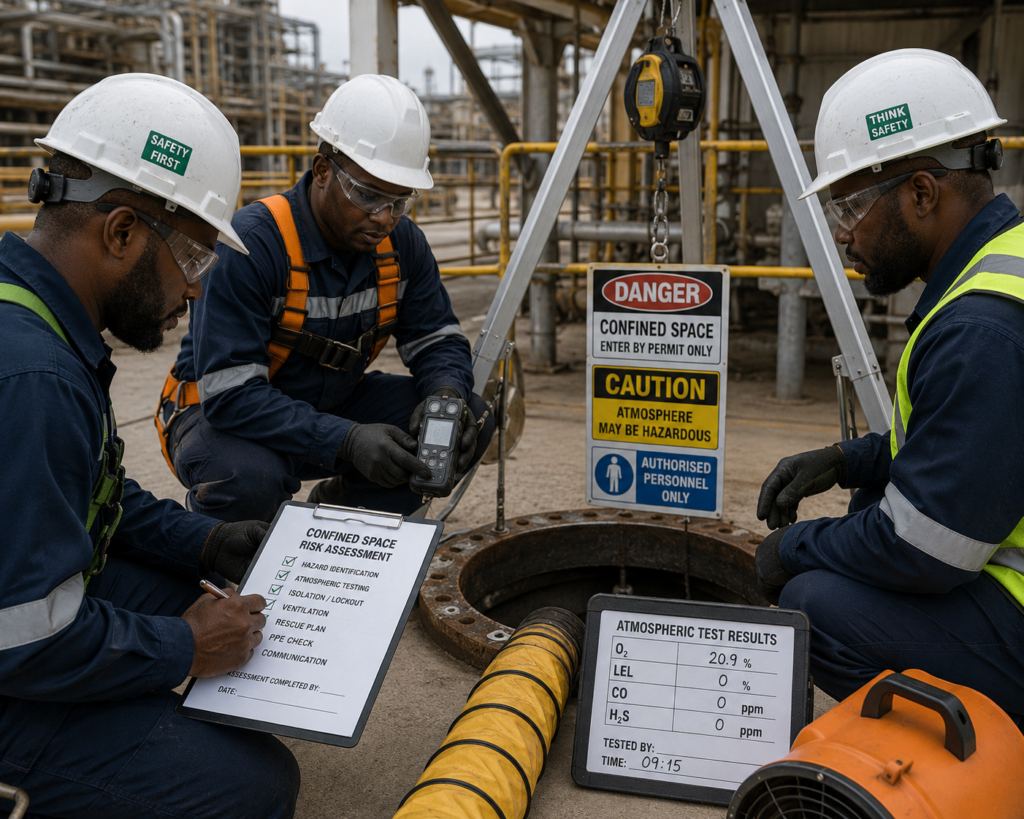
Confined spaces are among the most hazardous work environments in industries such as construction, oil and gas, manufacturing, utilities, and marine operations. Without proper planning and assessment, these confined spaces can lead to serious injuries or fatalities due to oxygen deficiency, toxic gases, engulfment, or restricted entry/exit.
This blog explains how to conduct a confined space risk assessment effectively and outlines best practices for protecting workers during confined space operations.
What Is a Confined Space?
A confined space is any area that is large enough for a worker to enter but has limited or restricted means of entry or exit and is not designed for continuous occupancy.
Typical examples include:
- Storage tanks
- Silos
- Sewers and manholes
- Boilers
- Pits and trenches
- Pipelines and tunnels
Understanding the nature of confined spaces is the first step in effective risk assessment.
Why Confined Space Risk Assessment Is Important
A confined space risk assessment is a systematic process used to identify hazards, evaluate risks, and determine control measures before entry.
It helps to:
- Prevent fatalities and serious injuries
- Ensure legal and regulatory compliance
- Improve emergency preparedness
- Define safe entry procedures
- Support Permit-to-Work (PTW) systems
Step-by-Step Guide to Conducting a Confined Space Risk Assessment
1. Identify the Confined Space
Start by clearly identifying all confined spaces within the workplace.
Ask:
- Is the space large enough for entry?
- Does it have limited access/exit points?
- Is it designed for continuous occupancy?
Create an inventory of all confined spaces and classify them based on risk level (low, medium, high).
2. Determine Who May Be Harmed
Identify all persons who could be exposed to hazards, including:
- Entry workers
- Standby attendants
- Supervisors and safety officers
- Rescue teams
- Contractors or visitors nearby
Understanding exposure helps tailor control measures effectively.
3. Identify Hazards Associated with the Confined Space
Confined spaces can contain multiple hazards, including:
Atmospheric Hazards
- Oxygen deficiency or enrichment
- Toxic gases (e.g., hydrogen sulfide, carbon monoxide)
- Flammable gases or vapors
Physical Hazards
- Engulfment (sand, liquids, grain)
- Slips, trips, and falls
- Mechanical equipment hazards
Environmental Hazards
- Extreme heat or cold
- Poor lighting and visibility
- Noise and vibration
Biological Hazards
- Sewage bacteria
- Mold or decomposing materials
4. Evaluate the Risks
Once hazards are identified, assess:
- Likelihood of occurrence
- Severity of consequences
- Duration and frequency of exposure
Use a risk matrix to categorize risks as:
- Low
- Medium
- High
- Critical
High and critical risks must be controlled before entry is permitted.
5. Implement Control Measures
Apply the hierarchy of controls:
Elimination
- Avoid entry where possible (remote inspection or cleaning)
Substitution
- Replace hazardous substances with safer alternatives
Engineering Controls
- Forced ventilation systems
- Gas detection and monitoring devices
- Isolation of energy sources (LOTO – Lockout/Tagout)
Administrative Controls
- Permit-to-Work (PTW) system
- Entry procedures and signage
- Training and supervision
- Time limits for entry
Personal Protective Equipment (PPE)
- Respiratory protection (SCBA or air-fed respirators)
- Harness and lifeline systems
- Protective clothing and gloves
6. Establish Emergency and Rescue Procedures
No confined space entry is safe without a rescue plan.
Your emergency plan should include:
- Standby rescue team
- Rescue equipment (tripods, winches, breathing apparatus)
- Communication systems
- First aid readiness
- Clear evacuation routes
- Emergency contact numbers
Never rely on external emergency services alone.
7. Monitor Atmospheric Conditions
Before and during entry:
- Test oxygen levels (19.5%–23.5% safe range)
- Check for flammable gases (LEL monitoring)
- Detect toxic substances
Continuous monitoring is essential in high-risk environments.
8. Authorize Entry Through Permit-to-Work System
A confined space entry should only proceed when a valid PTW is issued.
The permit should confirm:
- Risk assessment completed
- Hazards controlled
- Atmospheric testing done
- PPE available
- Rescue plan in place
- Authorized personnel signed off
9. Communicate the Risk Assessment
Ensure all workers understand:
- Hazards involved
- Control measures
- Emergency procedures
- Roles and responsibilities
Toolbox talks should be conducted before entry.
10. Review and Update the Risk Assessment
Confined space conditions can change quickly. Review the risk assessment when:
- Work conditions change
- New hazards are identified
- An incident or near miss occurs
- Equipment or processes are modified
Continuous improvement is key to safety performance.
Conclusion
Conducting a proper confined space risk assessment is not just a regulatory requirement—it is a lifesaving process. By identifying hazards, evaluating risks, and implementing strict control measures, organizations can significantly reduce the likelihood of accidents and fatalities.
A strong safety culture, supported by training, supervision, and a robust Permit-to-Work system, is essential for safe confined space operations.
To ensure competence of personnel and safety in confined space operations, contact us for our confined space training through our website: www.primeliftsafetyng.com or call +234 9115687051. Email us at training@primeliftsafetyng.com