

Introduction
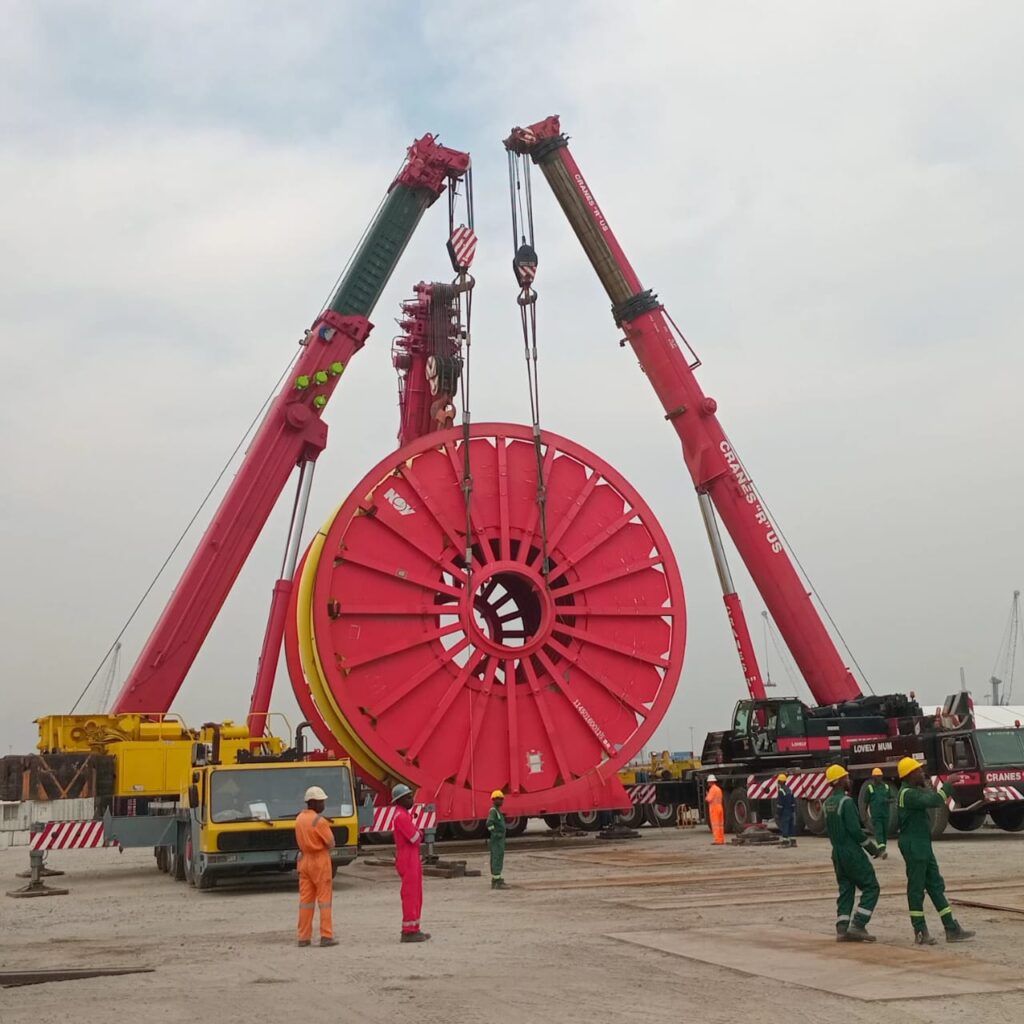
Tandem lifting operations are among the most complex and high-risk lifting activities performed in construction, oil and gas, manufacturing, petrochemical plants, marine operations, and infrastructure projects. These operations involve two or more cranes working simultaneously to lift, move, and position a single load.
This blog explains how to plan tandem lifting operations effectively while ensuring compliance with industry best practices and safety standards.
What is a Tandem Lift?
A tandem lift is a lifting operation where two or more cranes simultaneously lift and move a single load under controlled conditions.
Tandem lifts are typically performed when:
- The load exceeds the capacity of a single crane.
- The load is unusually long or awkwardly shaped.
- Site restrictions prevent the use of a larger crane.
- The load’s center of gravity requires support at multiple lifting points.
- Precision positioning is required.
Because of the complexity involved, tandem lifting is usually classified as a critical lift.
Step 1: Determine Whether a Tandem Lift is Necessary
Before planning a tandem lift, determine if alternative lifting methods are available.
Questions to ask include:
- Can a larger crane perform the lift?
- Can the load be broken into smaller components?
- Can the lifting sequence be modified?
- Can lifting accessories improve load handling?
A tandem lift should only be selected when safer alternatives are not feasible.
Step 2: Conduct a Detailed Risk Assessment
A formal risk assessment must be completed before any tandem lifting operation.
The assessment should identify load hazards, equipment hazards, environmental hazards, human factors
Each identified hazard should have corresponding control measures.
Step 3: Determine the Exact Load Weight
Accurate load weight is critical. Never estimate the load weight. Weight information can be obtained from:
- Manufacturer specifications
- Engineering drawings
- Certified calculations
- Weighbridge records
Step 4: Identify the Center of Gravity
Understanding the center of gravity (COG) is essential for load stability.
The lift planning team should determine horizontal COG, vertical COG and load balance points. An incorrectly identified COG can cause load tilting, uneven crane loading, sudden load shifts. Engineering calculations may be required for irregular loads.
Step 5: Select Suitable Cranes
Crane selection should be based on:
- Load Capacity
- Boom Length
- Crane Type
- Operating Radius
Step 6: Calculate Load Distribution
Load sharing between cranes is one of the most critical aspects of tandem lifting.
Engineers must determine:
- Percentage of load carried by each crane
- Dynamic load effects
- Load transfer during movement
Step 7: Develop a Detailed Lift Plan
A written lifting plan should include:
- Lift description
- Crane Information
- Load Information
- Rigging Information
- Personnel
- Emergency Arrangements
Step 8: Prepare Crane Positioning and Ground Conditions
Ground stability is critical. Conduct a site survey to verify:
- Soil bearing capacity
- Underground services
- Excavations
- Drainage conditions
Ground failure remains one of the leading causes of crane incidents worldwide.
Step 9: Inspect Rigging Equipment
All lifting accessories should be inspected before use. Ensure all lifting gears have valid certifications and current colour. Defective equipment must be removed from service immediately.
Step 10: Establish Communication Protocols
Communication failures are a major contributor to tandem lifting accidents. The method of communication should be agreed upon before starting the lifting operations.
Only one designated signaler should direct the lift. This eliminates conflicting instructions.
Step 11: Conduct a Pre-Lift Meeting
A toolbox talk should be conducted before the operation. All personnel must understand the lift plan.
Step 12: Perform a Test Lift
A test lift verifies load balance, rigging integrity, crane response and communication effectiveness. The load should be raised slightly off the ground and held stationary for inspection. Any abnormalities should be corrected before proceeding.
Step 13: Monitor Weather Conditions
Weather can significantly impact tandem lifts.
Operations should be suspended if:
- Wind speed exceeds crane manufacturer limits
- Lightning is present
- Visibility becomes poor
- Heavy rainfall affects ground conditions
Continuous weather monitoring should be maintained throughout the operation.
Step 14: Execute the Lift
During execution:
- Follow the approved lift plan.
- Maintain constant communication.
- Monitor crane load indicators.
- Avoid sudden movements.
- Keep personnel outside exclusion zones.
- Maintain load stability at all times.
The lift supervisor should oversee the entire operation.
Step 15: Post-Lift Review
After completion:
- Inspect cranes and rigging equipment.
- Record lessons learned.
- Document incidents and near misses.
- Update lifting procedures if necessary.
Continuous improvement strengthens future lifting operations.
Conclusion
Tandem lifting operations require meticulous planning, engineering expertise, effective communication, and strict safety controls. Every aspect of the lift—from load calculations and crane selection to rigging inspections and weather monitoring—must be carefully managed to prevent incidents.
To ensure competence of personnel and safety in your lifting operations, contact us for our various lifting operation trainings through our website: www.primeliftsafetyng.com or call +234 9115687051. Email us at training@primeliftsafetyng.com