

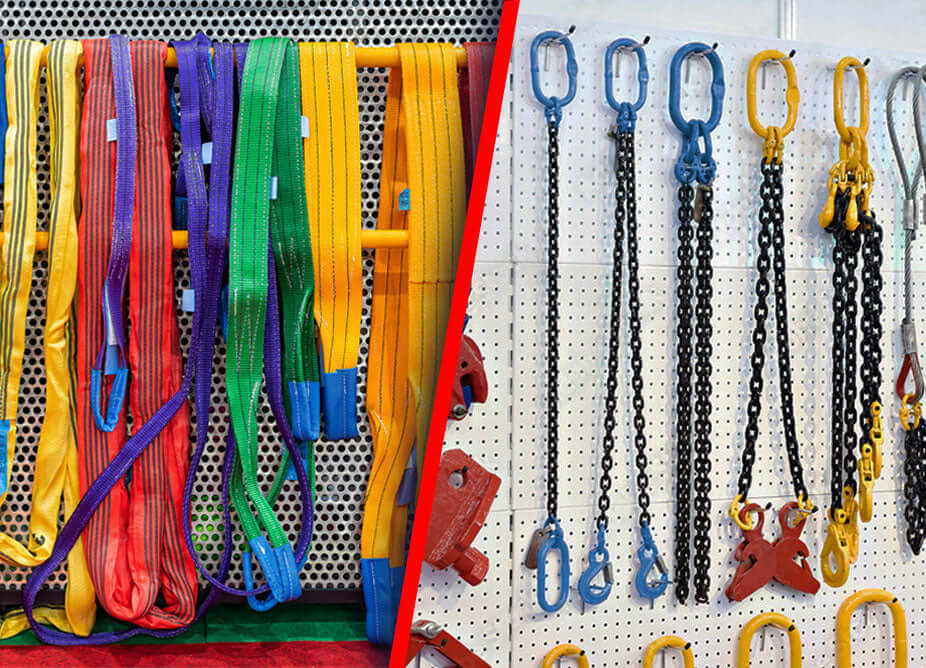
Lifting slings selection for lifting operations must be based upon the type of load, weight and configuration of lift (choker, vertical or basket). It is important to realize that the same lifting sling has different capacities for each specific hitch.
There are several different types of lifting slings to choose from. The slings used most frequently in lifting operations are synthetic web slings, synthetic round slings, wire rope slings, and alloy steel chain slings.
A critical consideration in lifting sling selection is the relationship between the rated capacities of the sling and the type of hitch you plan to use. The rated capacity of a sling used with a vertical hitch will be different if you use the same sling with a choker hitch or a basket hitch.
Factors to Consider when Selecting Lifting Slings
When selecting a lifting sling for a particular lifting application, ask yourself the following questions:
• What is the weight of the load?
• Does the load have obvious or offset centre of gravity?
• Is the lifting sling compatible with the hitch you will use to perform the lift safely?
• Does the design and composition of the lifting sling make it strong enough to perform the work safely (rated capacity)? Remember to consider reductions for sling angles and the type of hitch you will be using.
• Is the lifting sling in good condition?
• Will the lifting sling keep the load secure and stable?
• Is the lifting sling compatible with the rigging hardware?
• Could the specific rigging and lifting application cause the sling to break or otherwise become damaged during the lift?
• Could the sling damage the materials or equipment that is to be rigged or lifted?
Characteristics of Lifting Slings
Chain slings, wire rope slings and textile slings each has their own particular characteristics and the best choice will depend largely on the nature of the load.
- Chain Slings

Alloy steel chain slings are strong and able to adapt to the shape of the load. Care should be taken when using chain slings because sudden shocks will damage them. This may result in sling failure and possible injury to workers or damage to the load.
Chain sling is the most basic of lifting media, and although it is far heavier than rope it has a far longer life and is far more robust.
It can better withstand rough usage, is less likely to damage, is almost perfectly flexible and can be stored for long periods without serious deterioration.
In use it tends to show evidence of damage better than wire rope or textiles, consequently examination is more reliable. Therefore, it remains the principal component of many lifting equipment.
Chain slings must be visually inspected prior to use. During the inspection, pay particular attention to any stretching, nicks, gouges, and wear in excess of the allowances made by the manufacturer. These signs indicate that the sling may be unsafe and must be removed from service immediately.
- Wire Rope Slings
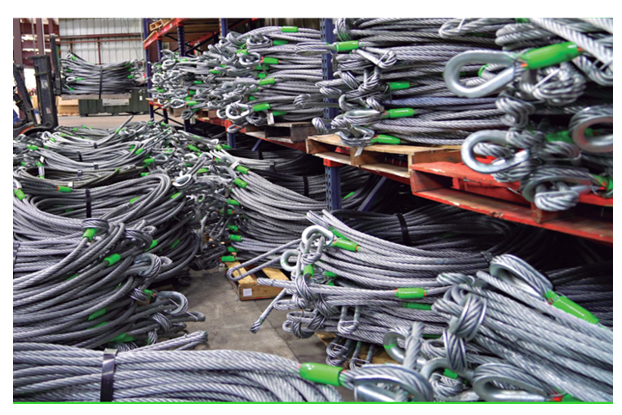
Wire rope slings are very popular for general lifting operations. However, they are more susceptible to damage than chain slings. They have the advantage that, due to their rigidity, they can be easily passed under loads when slinging.
If a wire rope sling is bent around a corner of the load or repeatedly used to lift identical loads, the sling will take on a permanent set (kink).
Misuse or abuse of wire rope slings will result in their failure long before any other factor. Abuse can lead to serious structural damage, resulting in kinks or bird caging. (In bird caging, the wire rope strands are forcibly untwisted and become spread outwards.)
- Synthetic Webbing Slings
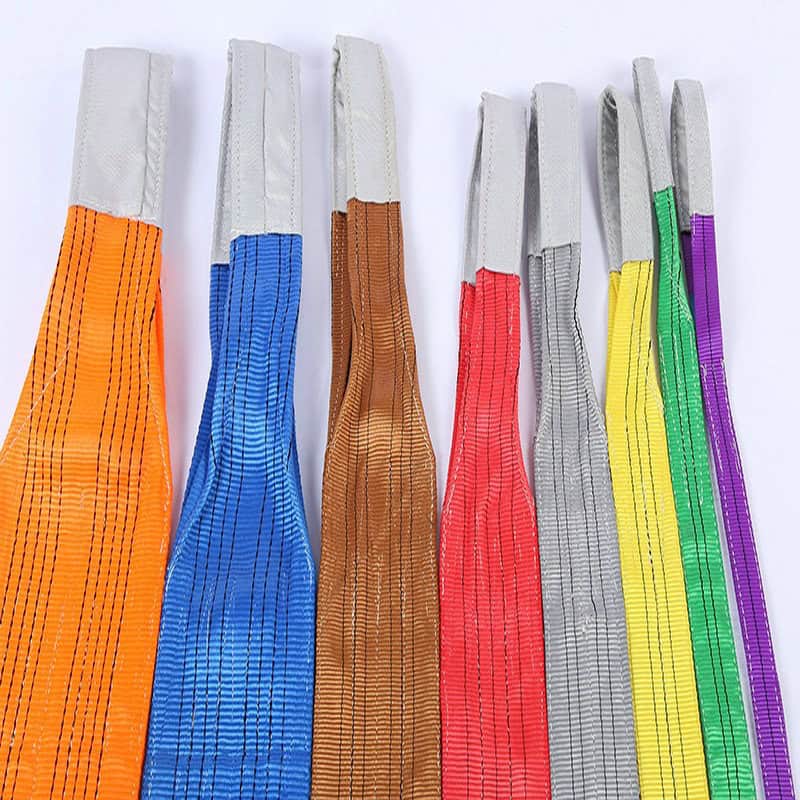
A webbing sling has two eyes at two ends and has a flat construction. It is a very popular design, but has one major disadvantage. The fibres which provide the strength to lift the load are also the ones which come in contact with the load. Therefore, in case of damage to the yarns, the sling must be taken out of service.
Flat woven webbing slings, also commonly known as sling belts, are used for a variety of lifting purposes. They are a form of textile sling which is soft and easy to handle whilst offering rigidity across their width.
These qualities make them ideal for handling loads which require some support when being lifted as the load is spread across the full width of the webbing, thus avoiding point contact as is the case with chain slings or wire rope slings. They are therefore less liable to damage finished surfaces than wire rope or chain slings. However, they are less robust and more easily damaged than equivalent capacity wire rope and chain slings.
- Synthetic Round slings
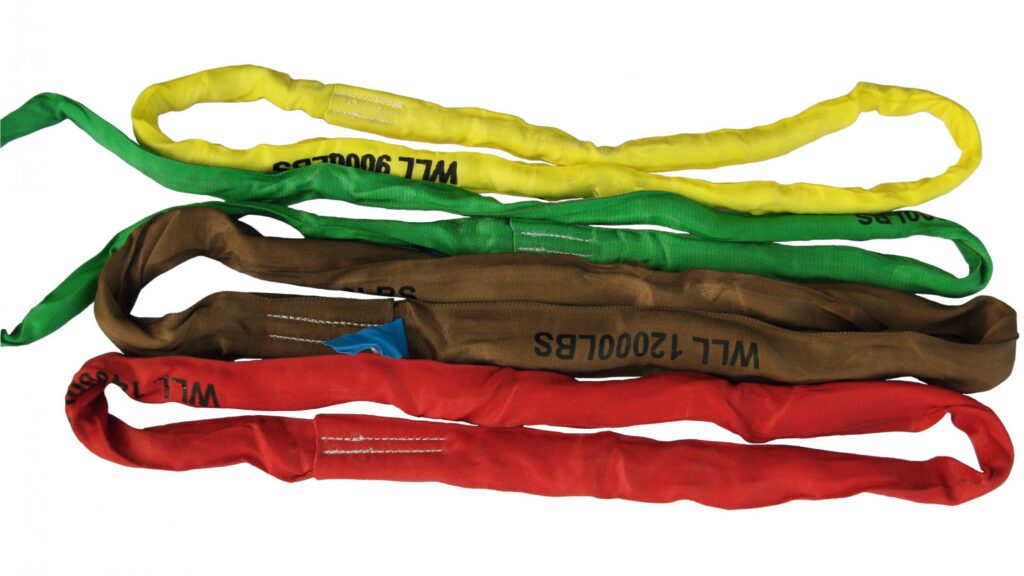
A round sling is an endless hank of yarn wound without any break and is a far better designed sling. The inner core yarn (which provides the strength to lift the load) is protected by the outer casing, which comes into contact with the load. Also, the (load) bearing points (the points which go on the crane hook) keep changing, whilst on a webbing sling the points are fixed.
Round slings are soft to handle and are completely pliable. This makes them ideal for lifting delicate loads or loads with polished surfaces. They are less robust and more easily damaged than the equivalent capacity wire rope and chain slings.
Interested in learning more? We offer lifting operation trainings at Primelift Safety Resources Limited. Contact us at www.primeliftsafetyng.com
Call us on +234 9115687051. Email us at training@primeliftsafetyng.com for more information.