

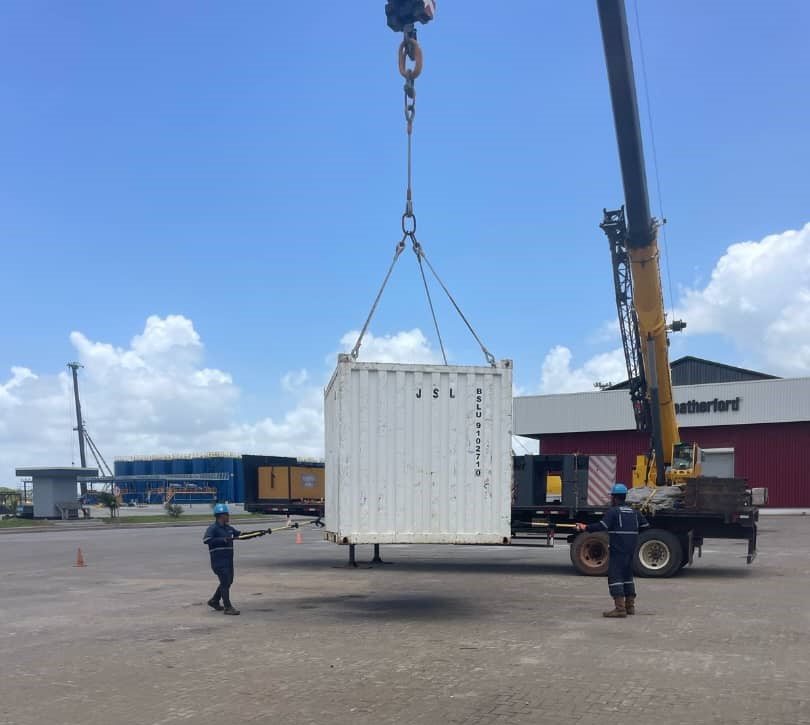
Rigging training is a critical component of safe and efficient lifting operations in industries like construction, manufacturing, marine, and oil & gas. Its importance stems from the severe consequences of failure, which can include fatalities, injuries, property damage, and financial loss.
Here’s a breakdown of why it is essential:
1. Safety – Preventing Injuries and Fatalities
· Human Life is at Stake: A single rigging mistake can cause loads to drop, cranes to collapse, or equipment to swing uncontrollably. This directly endangers riggers, crane operators, and nearby personnel.
· Risk Awareness: Rigging training teaches personnel to recognize hazards like:
· Overloading slings or equipment
· Incorrect hitch configurations (e.g., choke vs. basket hitches)
· Damaged or degraded rigging hardwares/gears
· Environmental factors (wind, temperature, ground stability)
· Safe Work Practices: Proper rigging training instils protocols for communication (hand signals, radios), load control, and personal protective equipment (PPE) use.
2. Technical Competence – The Science of Rigging
· Understanding Load Dynamics: Rigging is not just attaching hooks. It involves calculating:
· Center of Gravity – improper balance causes dangerous tipping.
· Sling angles – as the angle decreases, tension on slings increases exponentially (e.g., a 30° angle doubles the load on each sling leg compared to a 90° angle).
· Equipment Selection and Inspection: Trained riggers know how to choose the right sling (chain, wire rope, synthetic), shackles, hooks, and below-the-hook devices for the load. They also perform pre-use and periodic inspections to identify defects before they cause failure.
3. Compliance with Legal and Regulatory Standards
· Mandatory Requirement: In most countries, rigging training is legally required under Occupational Health and Safety regulations (e.g., OSHA in the USA, LOLER in the UK, ASME/ANSI standards).
· Liability Reduction: Companies that provide certified training demonstrate due diligence, reducing legal liability and potential penalties in case of an incident.
· Certification: Many jurisdictions require designated “Qualified Riggers” to plan and supervise critical lifts.
4. Operational Efficiency and Cost Savings
· Prevent Costly Mistakes: A dropped load can damage expensive equipment, materials, or infrastructure, leading to project delays and high repair/replacement costs.
· Optimize Workflow: Properly trained riggers work faster and more confidently, reducing downtime. They can plan lifts correctly the first time, avoiding re-rigging and delays.
· Extend Equipment Life: Correct use, handling, and storage of rigging gears prevent premature wear and failure, lowering replacement costs.
5. Risk Management and Incident Prevention
· Pre-Lift Planning: Rigging training emphasizes the importance of lift planning, including risk assessments, method statements, and contingency plans for complex lifts.
· Human Factor Mitigation: Rigging errors often stem from complacency, assumptions, or lack of knowledge. Training builds a culture of verification and procedural adherence.
6. Protection of Public and Property
· Lifts often occur near public spaces, roads, or active work zones. A failure can endanger bystanders and adjacent properties. Rigging training includes securing the work zone and planning for public safety.
Key Components of Effective Rigging Training:
· Hands-On Practice: Beyond theory, trainees must apply techniques with real equipment.
· Load Calculations: Teaching how to calculate loads, tensions, and capacities.
· Inspection and Defect Recognition: Identifying cracks, deformation, wear, and corrosion.
· Communication Protocols: Standardized signals and lift coordination.
· Documentation: Understanding lift plans, inspection records, and compliance paperwork.
Conclusion
Rigging is a high-risk, high-responsibility discipline where the margin for error is zero. Rigging training transforms an ordinary worker into a competent professional who can ensure that lifting operations are conducted safely, efficiently, and reliably. It is an investment that protects lives, assets, and the overall success of industrial operations.
Bottom Line: You wouldn’t let an untrained person fly a plane or perform surgery. Similarly, you should never allow untrained personnel to rig a load. The stakes are just as high.
Interested in learning more? We offer rigging and lifting training at Primelift Safety Resources Limited.
Call us on +234 9115687051 or email us at training@primeliftsafetyng.com for more information.