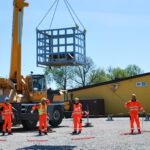

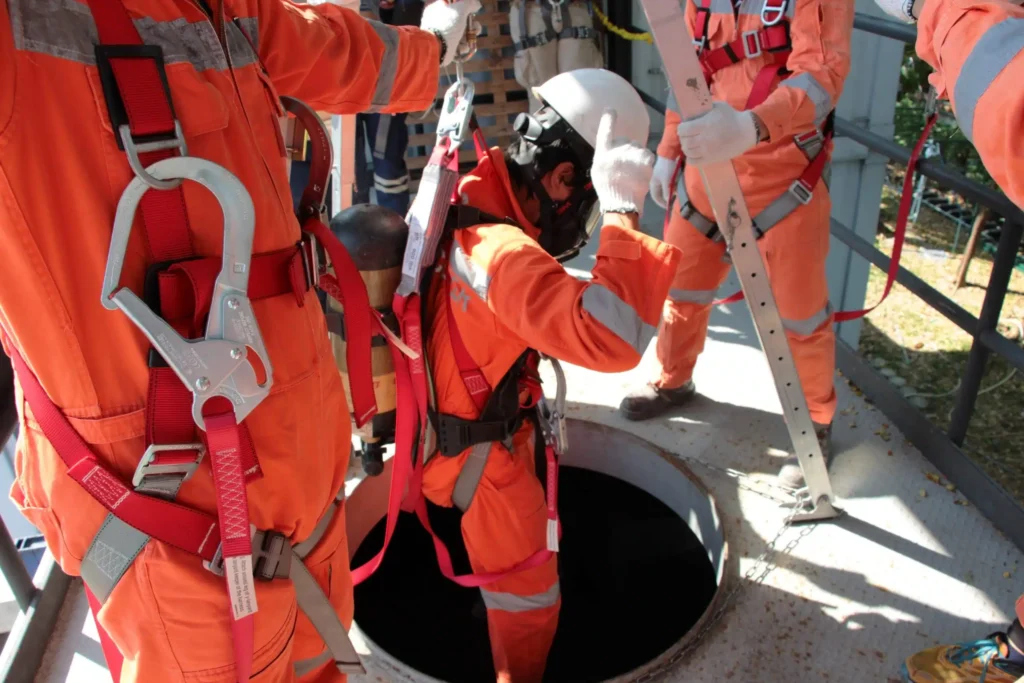
Two-thirds of all confined space fatalities occur among would be rescuers. A well planned confined space rescue can end up as a body retrieval.
Confined space rescues can be performed by any employee or a professional rescuer so long as he has been fully trained and qualified to act as a rescuer.
Qualifications include knowledge and experience of working with all hazards associated with rescue and confined space entry operations.
Confined Space Rescue Plan
Rescue plan is required for all confined space works to cater any emergency that will occur during confined space operations.
A confined rescue plan should include the following elements:
- A barricade area for crowd control
- Additional ventilation options
- Control of other hazards
- Protective clothing and equipment
- Appropriate lighting equipment
- Methods of communication
- A standby rescue team
- Victim removal procedures and devices
- Available emergency vehicles
- Medically trained personnel
Confined Space Rescue Techniques
There are 3 types of rescue techniques in confined space:
- Self rescue
- Non-entry rescue
- Entry rescue
- Confined Space Rescue Techniques (Self Rescue)
When the emergency is minor, self rescue is often the best approach.
The self rescue plan provides entrants with the best chance of escaping a permit space when hazards are present.
Whenever authorized entrants recognize their own symptoms of exposure to a dangerous atmosphere, or when a prohibited condition is detected, entrants are still able to escape from the space unaided and as quickly as possible.
Self rescue is vitally important because the entrant is:
- Conscious and alert.
- Able to recognize his own signs and symptoms.
- Still physically able to evacuate the space more rapidly than waiting for someone to rescue him.
- Able to alert fellow workers of impending danger.
- Not endangering anyone else.
- 2. Confined Space Rescue Techniques (Non-entry)
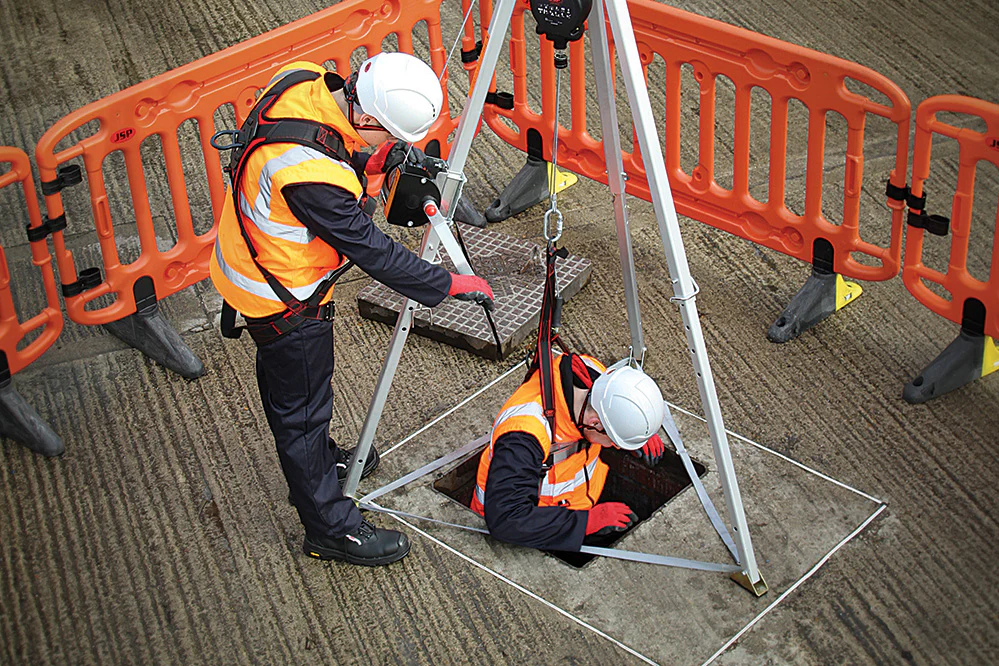
Rescue that is conducted without entry into the confined space. When self-rescue is not possible, non-entry rescue can be started right away and prevents additional personnel from being exposed to unidentified and uncontrolled confined space hazards.
Usually, equipment and other rescue aids are employed to assist in removing endangered entrants.
3. Confined Space Rescue Techniques (By Entry)
Entry rescue involves rescuers entering the space to retrieve the entrant and provide the victim with emergency assistance. An entry rescue plan needs to be developed ahead of time in the event of an emergency.
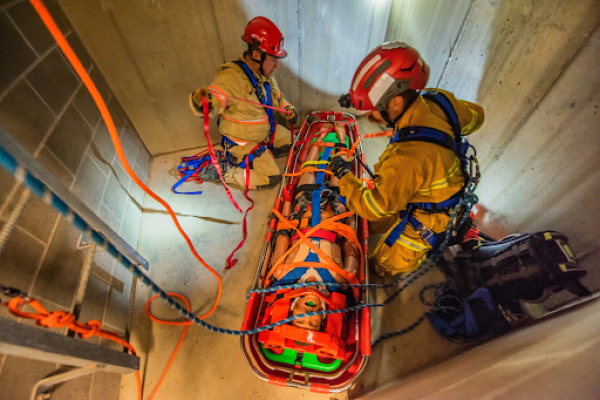
Rescue by entry can be classified into:
- On-site rescue
- Off-site rescue
- Rescue by Entry (On-site Rescue) – Because most rescue service providers are unable to rescue within the four minute time limit, most employers develop their own rescue teams.
All the rescue team members should be trained to properly use and maintain PPE and rescue equipment, acts as a rescuer in annual simulated emergencies and assume individual roles and take on any emergency.
- Rescue by Entry (Off-site Rescue) – If the company do not have trained personnel for emergency rescue, then they must hire a third party rescue service to conduct emergency rescues. The window of opportunity for a rescue is very brief (only four minutes), the response time for an off-site rescue team may be considerably longer.
To make sure the confined rescue plan is effective, organise local rescue/fire departments prior to the job and provide access to the space so that they can familiarize themselves with the site, develop a rescue plan in advance, and practice rescue operations.
Re-evaluating Confined Space Rescue plan
The confined space rescue plan should be re-evaluated whenever:
- Conditions change within the space.
- Workers discover any new hazards.
- There are changes in the rescue personnel and/or personnel availability.
- New equipment is purchased.
- Routine proficiency training results are unsatisfactory.
- A rescue plan is found to be deficient (e,g., a failed simulated rescue.
Confined Space Rescue Training
At a minimum, confined space rescue training should cover the following:
- Recognition of permit space hazards
- Control of permit space hazards
- Use of atmospheric monitoring equipment
- Use and maintenance of PPE
- Use and maintenance of rescue equipment
- Annual practice of permit space rescues
- Proficiency in first aid training and CPR
- Documentation of training
Primelift Safety Resources Limited offers training in confined space entry and rescue.
Call us on +234 9115687051. Email us on training@primeliftsafetyng.com
www.primeliftsafetyng.com