

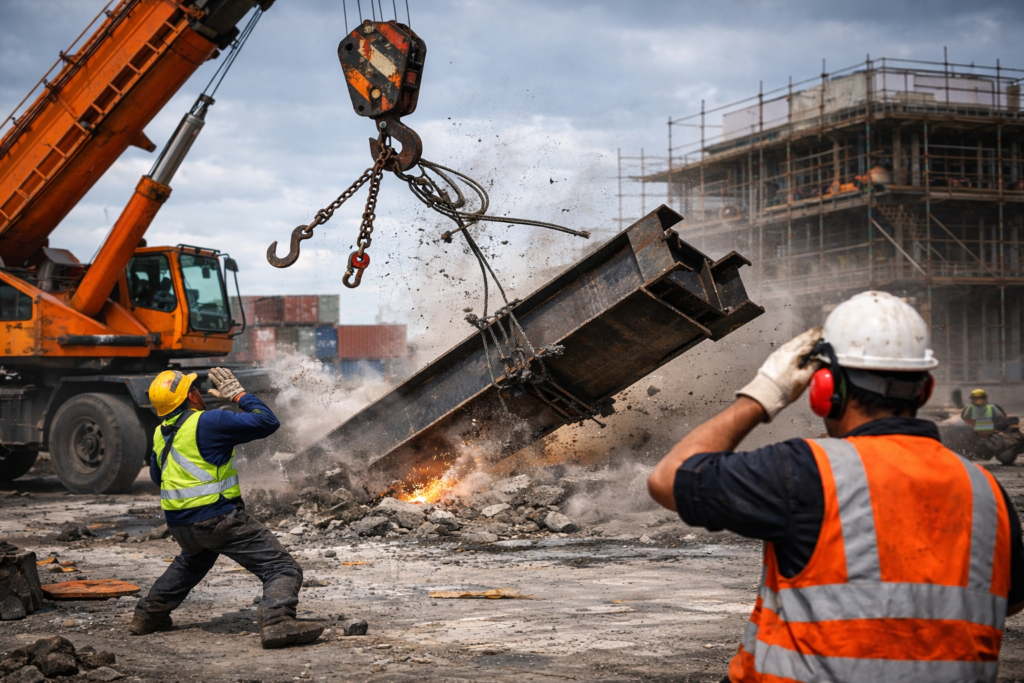
Rigging failures are among the most dangerous incidents in lifting operations, often leading to severe injuries, equipment damage, costly downtime, and even fatalities. Whether in construction, oil and gas, or logistics, preventing these failures requires a combination of proper planning, competent personnel, quality equipment, and strict adherence to safety standards.
This blog highlights practical strategies to help you prevent rigging failures and ensure safe lifting operations.
What Are Rigging Failures?
Rigging failure occurs when lifting equipment or techniques fail during a lifting operation. This can include the failure of slings, shackles, hooks, or lifting beams, often caused by overload, improper use, or poor inspection practices.
Common Causes of Rigging Failures in Lifting Operations
Understanding the root causes is the first step to prevention:
- Overloading equipment beyond its Safe Working Load (SWL)
- Using damaged or worn-out rigging gear
- Incorrect rigging techniques or hitch configurations
- Poor communication during lifting operations
- Lack of competent supervision
- Environmental factors (wind, rain, poor visibility)
How to Prevent Rigging Failures in Lifting Operations
1. Conduct Thorough Pre-Lift Planning
Every safe lift starts with a plan. A lifting plan should include:
- Load weight and center of gravity
- Selection of appropriate rigging equipment
- Identification of hazards
- Defined roles and responsibilities
- Emergency procedures
For complex lifts, develop a method statement and conduct a risk assessment before execution.
2. Use the Right Rigging Equipment
Always ensure that rigging equipment:
- Matches the load requirements
- Has clearly marked SWL/WLL (Working Load Limit)
- Is suitable for the lifting environment
Common rigging equipment includes:
- Wire rope slings
- Chain slings
- Synthetic web slings
- Shackles and hooks
Avoid mixing incompatible components or using uncertified equipment.
3. Perform Regular Inspection and Maintenance
Inspection is critical to preventing rigging failure:
- Pre-use inspections: Check for wear, corrosion, deformation, or broken strands
- Periodic inspections: Conducted by a competent person
- Documentation: Maintain inspection logs and certification records
Remove defective equipment from service immediately.
4. Ensure Competent and Trained Personnel
Only trained and certified personnel should perform rigging tasks:
- Riggers
- Crane operators
- Signalers (banksmen)
- Lifting supervisors
Invest in rigging and lifting training programs aligned with industry standards.
5. Follow Proper Rigging Techniques
Incorrect rigging methods are a leading cause of accidents. Ensure:
- Correct hitch types (vertical, choker, basket)
- Proper sling angles (avoid excessive angles that increase tension)
- Balanced load distribution
- Protection of slings from sharp edges
Always verify that the load is stable before lifting.
6. Implement Effective Communication in Lifting Operations
Clear communication prevents confusion and accidents:
- Use standardized hand signals
- Assign one designated signaler
- Use radios in noisy environments
Miscommunication during lifting can lead to catastrophic outcomes.
7. Monitor Environmental Conditions
Environmental factors can significantly impact lifting operations:
- High winds can destabilize loads
- Rain can reduce visibility and increase slip hazards
- Uneven ground can affect crane stability
Suspend operations if conditions become unsafe.
8. Enforce Safety Procedures and Supervision
Strong supervision ensures compliance:
- Appoint a lifting supervisor for every operation
- Conduct toolbox talks before lifts
- Enforce Permit-to-Work systems where applicable
A proactive safety culture reduces the risk of rigging failures.
Best Practices for Safe Lifting Operations
- Never exceed lifting equipment capacity
- Always verify load weight before lifting
- Use tag lines to control loads
- Keep personnel clear of suspended loads
- Maintain proper documentation
Conclusion
Preventing rigging failures in lifting operations is not optional—it is essential for protecting lives, assets, and business continuity. By combining proper planning, skilled personnel, quality equipment, and strict safety practices, organizations can significantly reduce risks and improve operational efficiency.
If you’re involved in lifting operations, now is the time to review your procedures, train your team, and commit to safer rigging practices.
Interested in learning more? We offer lifting operation trainings at Primelift Safety Resources Limited.
Call us on +234 9115687051. Email us at training@primeliftsafetyng.com for more information. www.primeliftsafetyng.com